Phone :
+ 86 018059983973Fax :
+86-595-22515221Email :
sales3@gester-instruments.comAdd :
No.15, Chifeng Road, Licheng Region, Quanzhou city of Fujian PR,China.Here’s Everything about the
Hot Wire Ignition Tester GT-MC38
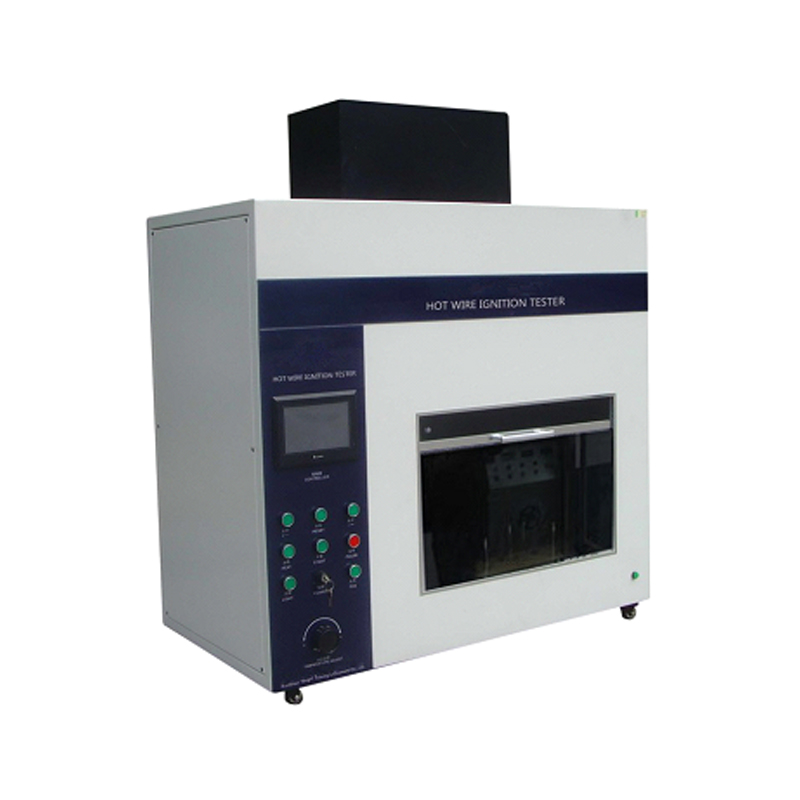
Basic Information about the Hot Wire Ignition Tester GT-MC38
Compliance Standards of GT-MC38 Hot Wire Ignition Tester
The GT-MC38 hot wire ignition tester is designed and manufactured in accordance with mainstream international and domestic safety standards, which ensures the standardization and authority of test results.Core Features of GT-MC38 electronic hot wire ignition test chamber
Simplifies the test operation process, reduces manual operation errors, and makes the test time control more accurate.
Realizes stable control of power output during the test, and maintains the stability of test conditions.
Offers all-round safety protection during the test, reducing potential risks in the test process.
Helps maintain a suitable test environment and ensures the normal progress of the test.
Provides stable clamping for test samples, ensuring the samples stay in a fixed position during the test.
Allows users to observe the test process intuitively while ensuring the safety of the test operation.
Why Is a Hot Wire Ignition Tester Needed?
Generally, the need for hot wire ignition testing depends mainly on the fire safety requirements of electrical and electronic products. When electrical equipment operates under abnormal conditions such as overload, short circuit, or poor contact, internal components may overheat. Overheating of heating elements (such as heating wires, transformer coils, and power resistors) can directly ignite organic materials in contact with or adjacent to them, including plastics, rubber, and insulating paper.
Traditional flame resistance tests do not accurately simulate this specific hazard caused by continuous heating from an internal heat source. Therefore, a standardized method is required to simulate the thermal impact of an overheating element on surrounding materials, thereby quantitatively evaluating a material‘s resistance to hot wire ignition.
The IEC60950 testing chamber evaluates the fire ignition hazard of a material by heating a resistance wire of specified material and size to a specific temperature, applying it to the sample surface with standardized pressure and duration, and observing whether the sample ignites. This is not only a necessary step in product safety design but also a key requirement for complying with international safety standards such as IEC, GB, and UL.
Applications of GT-MC38 Hot Wire Ignition Test Apparatus
The GT-MC38 hot wire ignition tester is widely used in scenarios that need hot wire ignition safety verification, and its stable performance supports reliable test results in different fields.
Electrical and electronic product manufacturing
Used for safety performance test of electrical and electronic products before leaving the factory to ensure products meet relevant safety standards.
Testing and certification institutions
Provides standard test support for product compliance certification, and offers authoritative data for safety evaluation.
Laboratory research and development
Helps researchers conduct hot wire ignition performance tests of new products, and supports product design optimization and improvement.
Quality inspection departments
Used for sampling inspection of products in the market, and supervises product safety performance.
FAQ
Q: What standards does the GT-MC38 hot wire ignition tester comply with?
A: The GT-MC38 complies with IEC60950, GB4943 and IEC 60477-1 clause 5.2.5.4, which can meet the test requirements of corresponding standards.
Q: What Does the Hot Wire Ignition Tester GT-MC38 Do?
A: The hot wire ignition tester is designed for testing the ignition resistance performance of electrical and electronic products, household appliances, and their materials. It simulates the potential leakage current that may occur on an insulator due to different polarities between energized components or between energized components and grounded metal parts.
Phone :
+ 86 018059983973Fax :
+86-595-22515221Email :
sales3@gester-instruments.comAdd :
No.15, Chifeng Road, Licheng Region, Quanzhou city of Fujian PR,China.Please read on, stay posted, subscribe, and we welcome you to tell us what you think.
Friendly Links :
Copyright © 2010-2026 GESTER International Co.,Ltd.All Rights Reserved. Powered by https://www.gestertester.com.