Phone :
+ 86 018059983973Fax :
+86-595-22515221Email :
sales3@gester-instruments.comAdd :
No.15, Chifeng Road, Licheng Region, Quanzhou city of Fujian PR,China.
What to Know About Toys Testing Equipment
Compliant with the New EN 71-1:2026 Standard
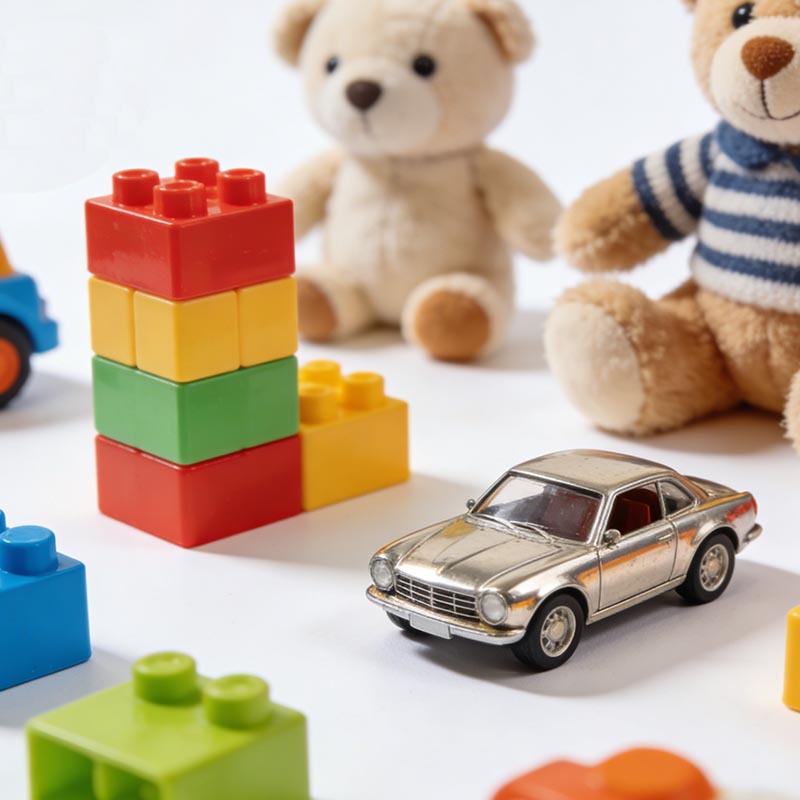
EN 71-1:2026 focuses on the mechanical and physical performance of toys, and is one of the most important safety norms for EU toys. Issued on January 28, 2026, the standard has made targeted revisions and additions to the technical requirements and testing methods of multiple toy categories, and also unified the specifications for toy packaging, warning signs and instructions for use, which directly eliminates the application conflicts between some existing toy safety standards.
Professional Toys Testing Equipment Compliant with EN 71-1:2026
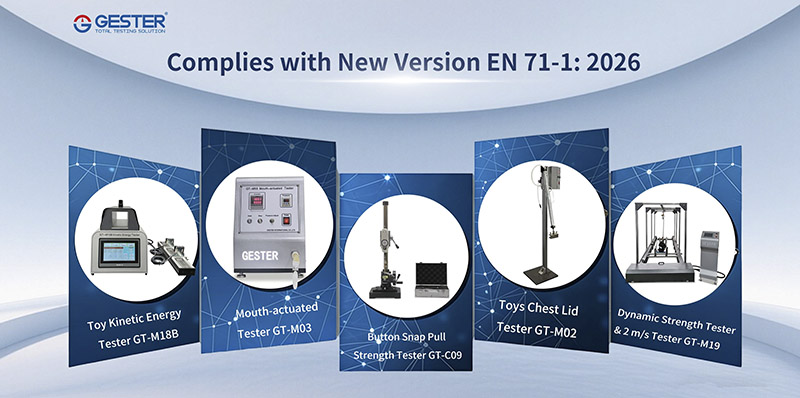
Dynamic Strength Tester & 2 m/s Tester GT-M19
This equipment is specially developed for the dynamic strength testing requirements of wheeled ride-on toys, which is the key testing item of EN 71-1:2026 for load-bearing ride-on toys such as toy scooters, balance bikes and bicycles. The new standard has clearly formulated the dynamic strength testing methods for various ride-on toys, and Dynamic Strength Tester & 2 m/s Tester GT-M19 can accurately simulate the actual use conditions of wheeled ride-on toys, test the dynamic strength of the whole machine and key components, and effectively detect the potential structural safety hazards of the products under dynamic stress, which is the core equipment for testing the dynamic performance of ride-on toys in line with EN 71-1:2026.
Toy Kinetic Energy Tester GT-M18B
Aiming at the safety testing of projectile toys, Toy Kinetic Energy Tester GT-M18B is used to detect the maximum kinetic energy generated by the fired bullets of projectile toys or the launched bows. The new standard has strict restrictions on the kinetic energy of projectile toys to avoid injury risks to children caused by excessive kinetic energy. This equipment can accurately measure the kinetic energy of projectile toys' launch components, and its testing data can directly reflect whether the products meet the kinetic energy limit requirements of EN 71-1:2026, providing a reliable basis for the safety control of projectile toys.
Toys Chest Lid Tester GT-M02
This equipment is applicable to the durability test of toy box covers, and is suitable for the testing of toy packaging accessories and toy storage box components that are widely used in the toy industry. EN 71-1:2026 has unified the packaging requirements of toys, and the durability of toy box covers is an important part of the mechanical performance of toy accessories. Toys Chest Lid Tester GT-M02 can simulate the repeated opening and closing of toy chest lids in actual use, test its structural durability and connection strength, and ensure that the toy box covers do not have structural damage or falling off risks that may cause child injury, complying with the new standard's requirements for toy accessory performance.
Mouth-actuated Tester GT-M03
Suitable for the safety test of mouth-actuated toys, a category that has high safety requirements in the toy industry. For mouth-actuated toys, EN 71-1:2026 has refined the mechanical and physical performance requirements to avoid risks such as component falling off and structural breakage when children use the toys by mouth. Mouth-actuated Tester GT-M03 can simulate the actual mouth use conditions of children, test the structural stability, component connection strength and other key indicators of mouth-actuated toys, and effectively screen out the potential safety hazards of such toys, fully meeting the new standard's testing requirements for mouth-actuated toys.
Button Snap Pull Strength Tester GT-C09
Focusing on the pull strength test of buttons, snaps and other small accessories on toy clothing and plush toys, the core purpose is to avoid the risk of infants eating by mistake due to the falling off of buttons and snaps. EN 71-1:2026 has strict requirements for the connection strength of small accessories of toys for children under 36 months, and Button Snap Pull Strength Tester GT-C09 can accurately test the pull strength of buttons and snaps, with high testing accuracy and stable results. It can directly verify whether the connection strength of toy small accessories meets the limit requirements of the new standard, and is the key equipment for the safety testing of toy small accessories.
How to Ensure Test Results Align with EN 71-1:2026 Compliance
The accuracy and compliance of toy safety test results are the core for toy enterprises to pass the EU market access certification. On the basis of professional compliant testing equipment and correct experimental design, the following measures need to be taken to further ensure that the test results are fully in line with the requirements of EN 71-1:2026.
Regular Calibration of Testing Equipment
Professional testing equipment must be regularly calibrated in accordance with the national metrological verification specifications and the requirements of EN 71-1:2026 to ensure that the equipment's testing accuracy is within the allowable error range. GESTER toys testing equipment has a perfect self-calibration function, and it is recommended that the enterprise carry out a full calibration of the equipment every 6 months, and carry out a spot check calibration of the key test parameters every month to avoid the test data deviation caused by the equipment's performance attenuation.
Professional Training of Operators
Although the toy testing equipment is easy to operate, the operators still need to receive professional training on EN 71-1:2026 and equipment operation. The training content should include the core revisions of the new standard, the testing requirements of various toy categories, the detailed operation steps of the equipment, the judgment of test results and the generation of test reports. Only the operators who have passed the training can carry out the toy safety test independently, which ensures the standardization of the test operation.
Real-time Follow-up of Standard Updates
EN 71-1:2026 is expected to be approved by the European Commission 12 months after its release, and there may be minor adjustments to individual clauses during the approval process. Toy enterprises and testing institutions need to follow up the latest dynamics of the standard in real time through the official channels of CEN and the European Commission, and adjust the test parameters and process of the equipment in a timely manner according to the standard adjustments to ensure that the test equipment and test process are always in line with the latest requirements of the standard.
Establishment of a Complete Test Data Management System
A complete test data management system should be established to realize the automatic storage, classification and traceability of test data. The toys testing equipment can connect with the enterprise's quality management system, and the test data and reports can be stored in the system in real time, which is convenient for the enterprise to query and trace the test data at any time. At the same time, the test data should be kept for at least 3 years in accordance with the EU's toy safety supervision requirements, so as to meet the spot check requirements of the EU market supervision departments.
Conclusion
The release of EN 71-1:2026 has raised the EU's toy safety access threshold, and the comprehensive revision and update of the standard have put forward higher requirements for the toy industry's production, design and testing work. For toy enterprises that want to enter the EU market, complying with the new standard is the top priority, and equipping with professional testing equipment that is fully compliant with the new standard is the core guarantee for realizing compliance.
The toy testing equipment is developed for the core revisions and new testing requirements of EN 71-1:2026, covering the key testing items of multiple toy categories such as ride-on toys, projectile toys and toy accessories. Compared with traditional manual testing, it has the advantages of high accuracy, strong professionalism, high efficiency and full compliance, and can provide accurate and reliable test data and standardized test reports for toy enterprises.
At the same time, to ensure the compliance of test results, toy enterprises also need to carry out correct experimental design, strictly follow the standardized test process, and take measures such as regular equipment calibration, professional operator training and real-time follow-up of standard updates. Only by combining professional compliant testing equipment with standardized test management can toy enterprises fully meet the requirements of EN 71-1:2026, smoothly pass the EU market access certification, and gain a firm foothold in the EU toy market.
If you need information on toy safety testing, EN 71-1:2026 compliant testing equipment, or toy quality control solutions, don’t hesitate to reach out!
Phone :
+ 86 018059983973Fax :
+86-595-22515221Email :
sales3@gester-instruments.comAdd :
No.15, Chifeng Road, Licheng Region, Quanzhou city of Fujian PR,China.Please read on, stay posted, subscribe, and we welcome you to tell us what you think.
Friendly Links :
Copyright © 2010-2026 GESTER International Co.,Ltd.All Rights Reserved. Powered by https://www.gestertester.com.